Iterative Calibration
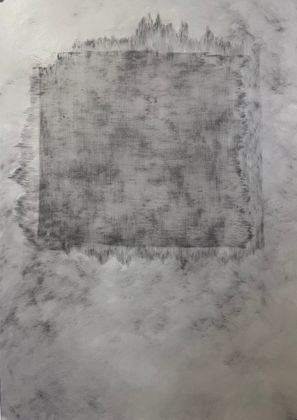
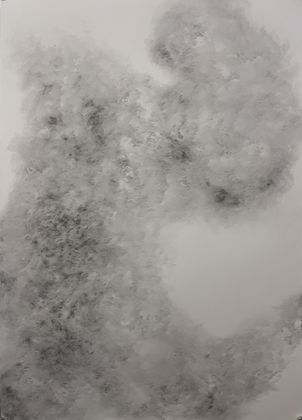
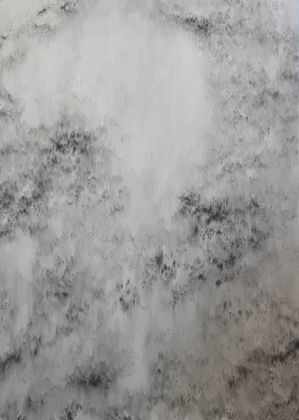
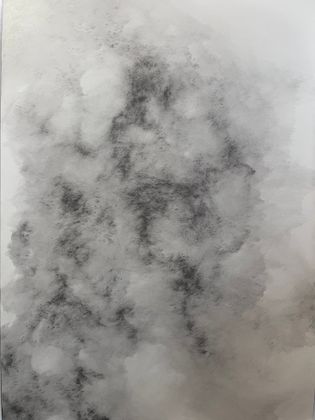
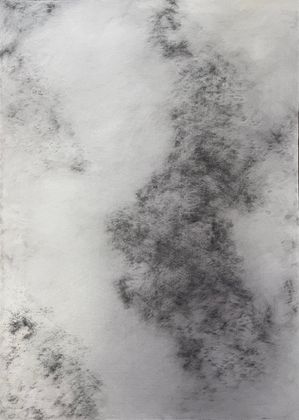
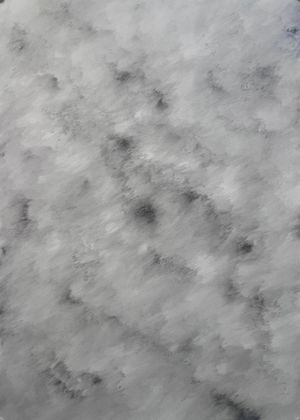
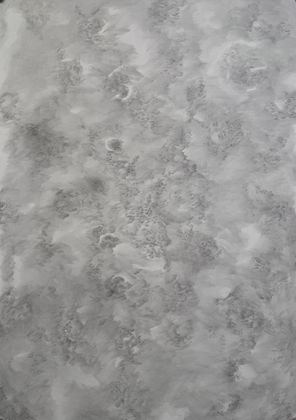
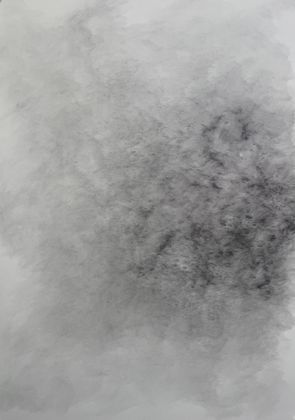
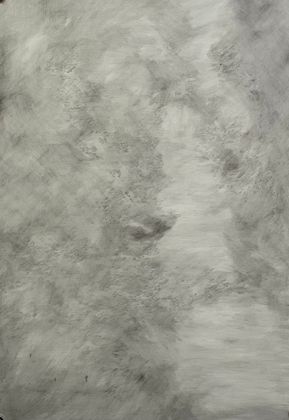
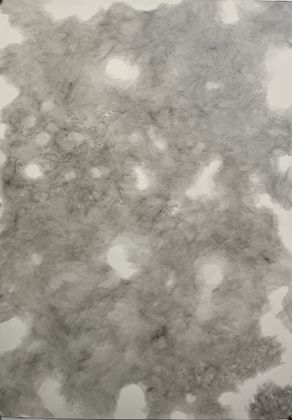
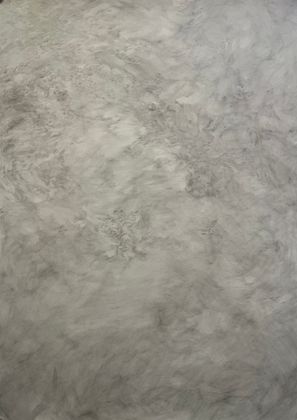
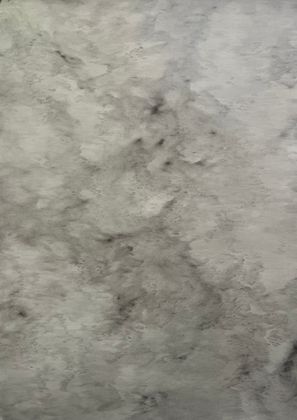
The material setup remains deliberately limited: one pencil grade, one sheet of paper, and prolonged repeated contact between graphite and surface. Within this simple structure, however, the process is highly complex. Every movement produces tactile resistance, vibration, sound, and a visible mark. As graphite builds up, the surface changes; resistance shifts, sound changes, the pencil wears down, the hand fatigues, attention fluctuates, and each new mark enters an already altered visual field. My responses to these conditions rarely take the form of explicit decisions. Touch, sound, vision, fatigue, habit, learned expectation, and previous experience act together, producing moment-to-moment adjustments that are only partly accessible to conscious attention. What appears from a distance as a relatively continuous grey field is therefore produced through thousands of non-identical actions. The duration of each drawing is determined through this process rather than by a fixed working time. I continue until further marks no longer register strongly enough against the existing field to require continued intervention. That point has changed measurably over the course of the series: early drawings took 55–60 hours to complete; the most recent, after eight months of sustained work on the series, took 32. Repeatedly working within the same basic material conditions has changed the body that returns to them. The earliest works developed slowly and cautiously. I had no prior experience of how pressure, speed, density, and individual marks would behave once covered by many subsequent layers, so I avoided bold gestures and applied minimal pressure. Over time, my hand and shoulder have adapted to the repeated movement, while accumulated familiarity with how marks behave within the developing field has made larger, faster, and more forceful movements possible. In recent drawings, the pressure can be strong enough to break the pencil lead two or three times during a single work. Actions that once felt risky can now be made with the expectation that their effects will later be redistributed or absorbed within the field rather than remain as isolated errors. This shift is visible in the work itself, not only in the process. Earlier drawings present as even, low-contrast fields built from many similar, restrained passes. More recent drawings contain distinct, high-pressure gestures—sweeping arcs, tight overlapping spirals—that remain partially legible as individual events even after extended layering, alongside areas of deeper tonal saturation. The series therefore does not simply repeat a stable procedure. Each drawing is made by a body already changed by the drawings that came before it, and that accumulated change is beginning to alter the finished images themselves. The individual drawing does not depict these adjustments directly or explain their causes. It remains the material residue of an extended encounter between a changing body and a changing surface. Across the series, however, that residue is itself changing in kind. Within Principle of Operation, Iterative Calibration preserves this interaction at a high degree of complexity. Rather than isolating individual variables, it allows sensory input, bodily habit, anticipation, fatigue, attention, and material change to remain entangled, while the series traces how patterns of response persist and reorganize through repetition over time.
12 works